Prof. Dr. Mohamed Awad Tag El-Din: A National Vision for the Future of Cancer Care in Egypt
 عبدالرحيم فرعون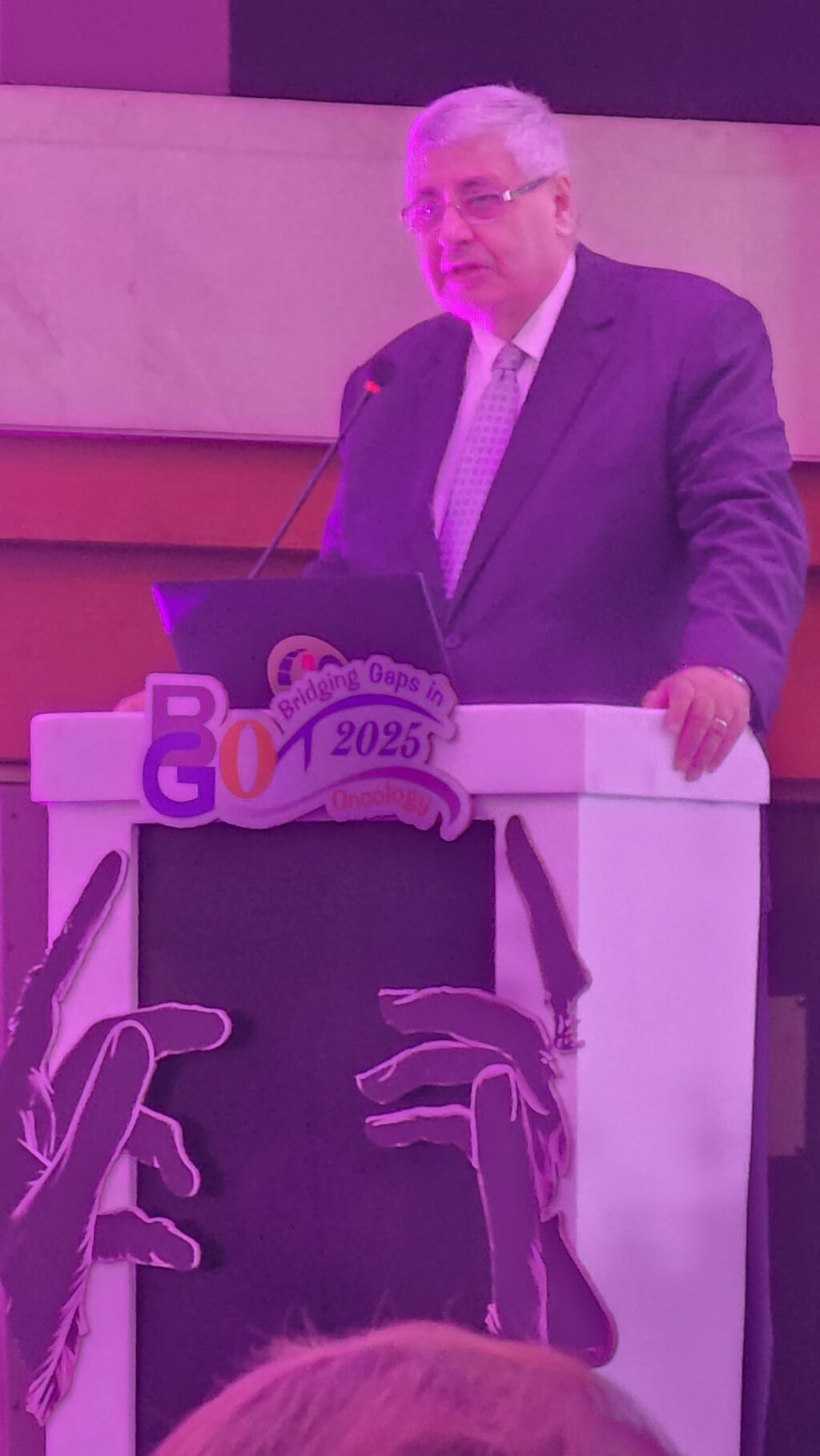
Abdelrehem abdelbary
The National Cancer Institute stands as one of Egypt’s most significant medical landmarks, functioning not only as a treatment center, but as a national hub for cancer research, education, and advanced patient care. During his keynote speech at the Institute’s annual conference, Prof. Dr. Mohamed Awad Tag El-Din, Advisor to the President for Health and Preventive Affairs, reaffirmed the Institute’s pioneering role within the country’s healthcare strategy. His address outlined a unified national vision built upon scientific development, institutional integration, and a firm commitment to serving patients with dignity and excellence.

During his speech, Prof. Dr. Tag El-Din highlighted that the National Cancer Institute is far more than a medical facility—it is the strategic axis of Egypt’s national cancer control framework. The Institute contributes to shaping clinical guidelines, advancing scientific research, and training specialized medical teams. His remarks emphasized the need to continuously develop medical infrastructure, enhance treatment capacity, and invest in healthcare professionals. He stressed that improving the quality of cancer care is not merely a medical necessity, but a national duty aligned with modern healthcare standards and international benchmarks.
The National Cancer Institute has maintained a leading position in Egypt’s health landscape for decades. Through its integrated model of treatment, research, and academic training, it has produced generations of highly qualified oncologists and researchers. Its services extend across all regions of the country, ensuring access to appropriate care for patients regardless of geographical location. The Institute also plays a vital role in public health education, advocating for early detection and preventive measures, making it not only a medical institution, but a national shield against one of the world’s most challenging diseases.
Prof. Dr. Tag El-Din emphasized the ongoing efforts to complete the construction of the 500500 Cancer Hospital in Sheikh Zayed City. Once operational, it will be among the largest and most advanced oncology hospitals in the Middle East. The facility will significantly expand treatment capacity, support cutting-edge research, and reduce the need for patients to travel long distances for care. The project reflects Egypt’s strategic commitment to comprehensive and equitable healthcare, ensuring that every patient receives specialized treatment within a world-class medical environment.
He also drew attention to the strong and continuous support from President Abdel Fattah El-Sisi, who receives weekly reports on the Institute’s progress. Dr. Tag El-Din referenced the historic national campaign that succeeded in eliminating Hepatitis C in Egypt, which is now celebrated globally as an unprecedented public health achievement. This model of integrated screening, diagnosis, and treatment now informs Egypt’s approach to cancer care, with a focus on early detection, standardized treatment protocols, and nationwide accessibility to medications.
A key aspect of the national cancer care strategy is the establishment of oncology units across university hospitals throughout Egypt. This decentralization ensures that treatment is brought closer to patients, reducing waiting times and improving quality of care. Prof. Dr. Tag El-Din highlighted the role of the Egyptian Health Council in developing unified clinical protocols, training healthcare providers, and monitoring service standards. The overarching goal is to minimize cancer incidence and improve survival outcomes while ensuring equal treatment access to all citizens.
Egypt’s battle against cancer is not only a medical journey, but a national mission built on collaboration, scientific dedication, and human compassion. With continued investment in facilities like the 500500 Hospital, expansion of oncology centers, and development of medical expertise, Egypt reaffirms its commitment to a future where advanced healthcare is a guaranteed right for every citizen.
Health is not merely a service… it is a promise to the nation.