The National Cancer Institute Launches Its Unified Vision Toward a Future Free from Cancer
 عبدالرحيم فرعون
Abdelrehem abdelbary
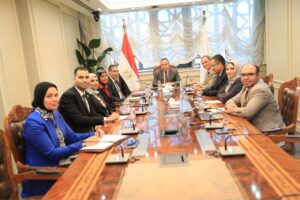
On the second day of the major annual scientific event organized by the National Cancer Institute – Cairo University, academic and medical leadership figures gathered to discuss the evolving landscape of cancer care and oncology research in Egypt and beyond. Among the distinguished attendees were Prof. Dr. Mohamed Awad Tag El-Din, Advisor to the President for Health and Prevention; Prof. Dr. Mohamed Lotfy, CEO of the Egyptian Health Council; Prof. Dr. Osama Abdel-Hay, President of the Egyptian Medical Syndicate; former Minister of Higher Education Prof. Dr. Hussein Khaled; and the Vice Presidents of Cairo University, Prof. Dr. Ahmed Ragab and Prof. Dr. Mohamed Refaat. Their presence emphasized the significance of the Institute’s strategic role in shaping the future of cancer healthcare nationally and internationally.

The conference, held under the theme “One Voice and One Vision for the Future of Cancer Care,” aims to consolidate national efforts in research, early diagnosis, and integrative treatment approaches. The second day’s agenda highlighted collaborative strategies between academic institutions, healthcare entities, and international partners to improve patient outcomes, reduce treatment burdens, and advance the adoption of emerging therapeutic technologies. The presence of thought leaders and clinical researchers created a dynamic environment fostering knowledge exchange, dialogue, and forward-thinking planning.
Prof. Dr. Mohamed Abdel-Moaty, Dean of the National Cancer Institute, opened his remarks by emphasizing the Institute’s unique academic identity. As one of Cairo University’s postgraduate institutions, the Institute grants master’s and doctoral degrees in addition to specialized professional diplomas. This academic foundation ensures the continuous development of advanced oncology expertise nationwide. Dr. Abdel-Moaty reaffirmed that education and scientific training are at the core of the Institute’s mission, shaping new generations of skilled clinicians, researchers, and healthcare innovators dedicated to combating cancer.

Dr. Abdel-Moaty also highlighted that the Institute currently operates three fully functional hospitals: the North and South Hospitals located in central Cairo and the Breast Cancer Hospital in New Cairo. He further announced the impending opening of the highly anticipated “500500 Hospital,” one of the largest cancer treatment and research facilities in the region. This expansion reflects Egypt’s commitment to providing comprehensive and accessible cancer care services while equipping medical institutions with state-of-the-art capabilities.
Reflecting on its rich historical legacy, the Institute was established in 1959 and separated administratively from Qasr Al-Aini in 1968, becoming an independent specialized academic and clinical center. Over the decades, the Institute has steadily expanded in scale and expertise, emerging as a core pillar of oncology education, patient care, and research in the Middle East. Its reputation continues to grow as its contributions to scientific publications, medical training, and community-based cancer awareness initiatives broaden year after year.

Despite facing critical challenges, the Institute has never ceased to serve patients. Dr. Abdel-Moaty reminded attendees that even during the tragic terrorist incident in 2019 and the global COVID-19 pandemic in 2020, the Institute continued to deliver full clinical services. This resilience symbolizes a deeply rooted institutional philosophy: healthcare delivery is a responsibility that cannot pause, especially for cancer patients who require continuous treatment and emotional support.
The Institute has also pioneered several specialized units that have shaped the progression of oncology care in Egypt. The Pain Management Unit was established in 1989 to improve patient comfort and quality of life, followed by the Bone Marrow Transplant Unit in 1988, which broadened the therapeutic capabilities of national cancer care. In 1998, the Institute founded Egypt’s first Clinical Pharmacy Unit, establishing a patient-centered pharmaceutical care model that later expanded to hospitals nationwide.

Academic outputs continue to be a defining hallmark of the Institute’s professional standing. In 2024 alone, a remarkable number of postgraduate scholars completed master’s and doctoral degrees, while many more have enrolled in ongoing programs. The Institute proudly records 8,064 internationally indexed scientific publications, cementing its place as a leading contributor to global oncology research.
In addition to national achievements, the Institute has strengthened international collaborative networks. In October 2024, a scientific delegation from the International Agency for Research on Cancer visited the Institute to discuss clinical-research cooperation. In November 2024, a research partnership was formalized with the Freiburg University Cancer Center in Germany. These partnerships reflect a progressive strategy to integrate global knowledge into local practice and contribute to international cancer science.
Looking ahead, several major milestones are expected. In 2025, the Institute will finalize a cooperative agreement with the International Atomic Energy Agency, reinforcing its leadership in radiotherapy and nuclear medicine. In October 2025, the Institute is scheduled to meet with the Bavarian Cancer Research Center in Berlin, hosted by the Egyptian Cultural Center. In November 2025, a National Cancer Registry Committee will be formed under the Supreme Council of University Hospitals.
This year’s conference program includes more than twenty specialized workshops covering advanced diagnostic imaging, molecular oncology, precision surgery, immunotherapy, and psychosocial support models. With over 1,500 physicians attending last year—and an even higher turnout expected this year—the conference continues to serve as a premiere scientific platform that unites experts, drives medical innovation, and shapes national healthcare planning.
Through its sustained clinical service, academic rigor, and international collaboration, the National Cancer Institute continues to lead Egypt’s fight against cancer. The second day of the conference reaffirmed a unified commitment toward a future where early detection is accessible, care is comprehensive, and hope is achievable. The Institute’s message remains clear: the future of cancer care demands cooperation, science, and unwavering dedication